
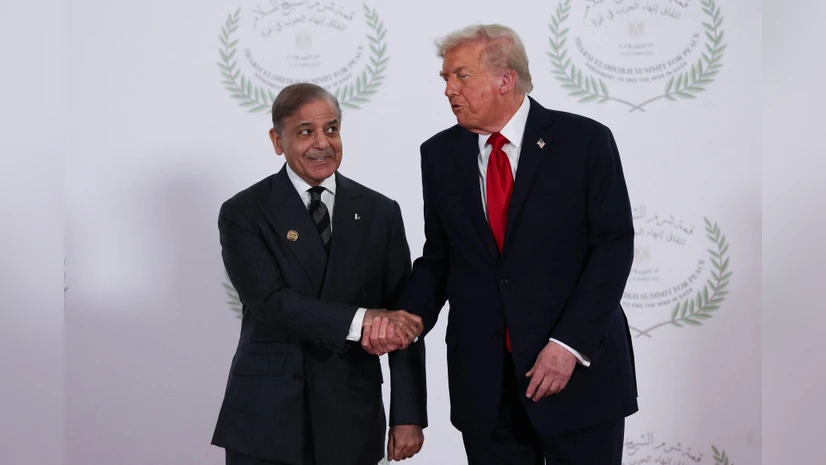
How a quiet U.S.–Pakistan arrangement and Trump’s “deal-making” politics risk another cycle of chaos in Afghanistan and the region.
By: Tariq Jahan
The month of October turned into a nightmare and terror for both Afghanistan and Pakistan. Fierce clashes broke out after Pakistan launched a series of airstrikes and drone attacks deep inside Afghanistan on October 9. The attacks, which killed civilians in Kabul and Paktika, sharply escalated tensions between the two sides. The Taliban condemned the attacks as clear violations of sovereignty. Within days, heavy clashes erupted along the Durand Line, leaving dozens dead on both sides. According to multiple reports, Taliban sources claimed to have killed over 50 Pakistani soldiers, while Pakistan claimed to have killed more than 200 Taliban fighters. Both sides accused the other of aggression, and major border crossings were closed, halting trade and movement. Iran, Saudi Arabia, and Qatar called for restraint, but their appeals were ignored. By mid-October, the violence had reached urban centers. Pakistani drones struck Kabul’s District 4 and Kandahar on October 15, killing and injuring dozens more. UNAMA confirmed that the worst-hit area was Spin Boldak in Kandahar, where 17 civilians were killed and hundreds wounded. Even after a brief ceasefire, Pakistan carried out further airstrikes on October 17, killing at least ten civilians—including three Afghan cricketers returning from a friendly match. The attacks were widely condemned as violations of international humanitarian law, with legal experts calling them potential war crimes.
Despite the fighting, both sides met in Qatar and later in Turkey to discuss peace. The talks were tense and fragile, reflecting how a long-standing patron–proxy relationship had now turned into open hostility. After repeated mediation by Turkey and Qatar, both sides agreed on October 30 to meet again in Istanbul in early November and to maintain a fragile ceasefire. The October clashes stood out for several reasons. Pakistan struck Kabul twice, killing and injuring dozens of civilians and destroying homes. Although Pakistan had previously attacked several provinces, killing civilians, this was the first time it struck the capital — triggering a swift and unexpected Taliban retaliation. Past responses had been primarily aimed at preserving the government’s image, making this one notably different. The Taliban’s response set a new precedent that any future aggression would be met with equal force, or at least not go unanswered. The clashes nearly turned into a full-blown war, as both sides deployed heavy weaponry and troops along multiple points of the de facto border. Without timely intervention from mediating countries, the situation could have escalated into regional conflict. The strikes also revealed a different dimension: Pakistan’s intent to carry out future attacks, knowing that the world would stay silent because the Taliban government lacks international recognition — and believing that with Trump’s backing, it could act with near impunity.
The most alarming revelation came later during the Taliban–Pakistan talks in Istanbul, when Taliban negotiators disclosed that Pakistan had admitted allowing U.S. drones to use its airspace for strikes inside Afghanistan under an existing agreement. This revelation raised serious concerns about renewed U.S. interference in the region, an arrangement that appears to serve Washington’s strategic goals while dragging both countries back into instability. It also confirmed what many Afghans had long suspected, that the United States never truly left Afghanistan but continues to influence its skies, politics, and security landscape through indirect means.
Trump’s pattern fits neatly into this unfolding drama. He creates crises, then positions himself as the one who can solve them. On October 13, while traveling to Egypt for the Israel–Hamas peace signing, he said,
“This will be my eighth war that I have solved, and I hear there is a war now going on between Pakistan and Afghanistan. I’ll have to wait till I get back—I’m good at solving wars.”
Since then, he has repeatedly claimed that resolving the Afghanistan–Pakistan conflict would be “easy” for him, while publicly praising Pakistan’s military and political leadership who, in turn, glorified his supposed “peacemaking role.” These repeated statements from Trump, coupled with Pakistan’s eagerness to please Washington, have raised doubts about the real motives behind this latest round of tensions. Many observers believe the conflict may have been intentionally amplified to create a problem that Trump could later claim to have solved, strengthening his image as a global dealmaker. There is now a new layer added to this already complex crisis. Pakistan’s claim that it could not violate its agreement with the U.S.—allowing drone access to Afghan airspace—points to renewed coordination between Washington and Islamabad. This has revived suspicions in Afghanistan that the U.S. and Pakistan are working hand in hand once again, possibly to justify re-establishing a presence in Afghanistan under the banner of “counterterrorism.” Some analysts in Kabul have also linked this to renewed U.S. interest in Bagram Airbase and the broader competition for influence in Central Asia.
For many Afghans, this feels like history repeating itself. The U.S. spent two decades in Afghanistan claiming to fight terrorism and build stability and state institutions—an oft-changing and conflicting agenda—but left behind a fractured and uncertain future. Trump’s rushed deal—the 2020 Doha Agreement—with the Taliban sidelined the Afghan government, dismissed the sacrifices of millions, and led directly to the chaotic withdrawal that humiliated both Washington and its allies. The result was a loss of trust not only among Afghans but also among America’s international partners. Today, many Afghans see U.S. actions as driven by self-interest rather than genuine concern for peace. The contradiction between what America says and what it does has left deep resentment. Even well-meaning U.S. initiatives are now viewed with skepticism, as people remember the broken promises and abrupt abandonment that paved the way for the Taliban’s return. The moral authority that the U.S. once claimed in Afghanistan has largely eroded, replaced by perceptions of hypocrisy and manipulation.
Regionally, the consequences are also serious. Pakistan once celebrated the Taliban’s comeback in 2021, but now faces growing insecurity within its own territory. The country is dealing with rising attacks from the Tehrik-i-Taliban Pakistan (TTP), a direct outcome of its own long-standing policies of supporting militant groups for strategic depth. Its policy of nurturing non-state actors has clearly backfired. Aligning again with Washington could further isolate Islamabad from countries such as China, Iran, and Russia—all of whom oppose renewed U.S. involvement in Afghanistan. More dangerously, such moves could reignite proxy conflicts across the region, with Afghanistan once again becoming the battleground and Pakistan unable to evade the resulting adverse and catastrophic ramifications. In an environment already threatened by ISKP and other extremist groups, the return of U.S.–Pakistan cooperation on drone strikes risks deepening radicalization and undermining any chance for sustainable peace.
In the end, Trump’s “resolution by creation” approach is reckless and short-sighted. It turns human suffering into political theatre. Pakistan’s willingness to participate—perhaps for short-term gains or promises of financial assistance—only risks further instability at home and in the wider region. Afghans have endured decades of wars created or fuelled by others. What they need now is respect for their sovereignty, not another cycle of chaos disguised as diplomacy.
Regardless of who governs Afghanistan today, its territorial integrity must be respected. It is wise for regional countries to work with the Taliban where necessary to ensure Afghans have access to essential services, while also engaging Afghan civil society and non-Taliban groups to build a future rooted in peace and mutual respect. Creating conflicts to later claim credit for resolving them is not leadership—it is manipulation. And Afghans, after years of disillusionment and betrayal, can see that clearly now.
About the author
Tariq Jahan is a PhD student at the University of St Andrews researching terrorism and insurgency.
Disclaimer
Opinions expressed here are the author’s own and do not represent ACSTD.
Photo credit
Reuters